Handy article for Software developers
PowerShell Scripts to Apply Configuration Transformations for App.Config or Web.Config Files - CodeProject
This blog will hold favorite gadgets and graphic user interfaces that don't really fit in my main blog @ mmcelhaney.blogspot.com
Showing posts with label Powershell. Show all posts
Friday, August 21, 2015
Wednesday, December 17, 2014
Displaying IIS Server Metrics
A significant problem has developed for me: how to let a user of as silverlight app know what is going on the web server running it? For example: How many users are on it? Is there a process hogging all the resources? Does the app have enough bandwidth to run properly? Turns out IIS 7 does provide tools to query and serve up this information in real time!
http://www.iis.net/overview/control/powerfuladmintools
And one such feature is being able to use PowerShell to script the tools to provide the data you want.
http://www.iis.net/downloads/microsoft/powershell
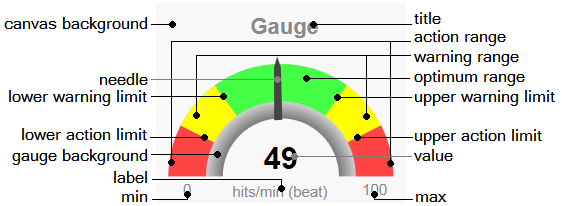
And on codeproject.com there was an article about putting real-time gauges on a web site,. This could be a great tool for displaying the data to users.
http://www.codeproject.com/Articles/604502/A-Universal-Gauge-for-Your-Web-Dashboard
http://www.iis.net/overview/control/powerfuladmintools
And one such feature is being able to use PowerShell to script the tools to provide the data you want.
http://www.iis.net/downloads/microsoft/powershell
And on codeproject.com there was an article about putting real-time gauges on a web site,. This could be a great tool for displaying the data to users.
http://www.codeproject.com/Articles/604502/A-Universal-Gauge-for-Your-Web-Dashboard
Labels:
IIS,
Powershell,
Servers,
web server,
Windows PowerShell
Friday, August 22, 2014
Using Powershells Scripts in Software Solutions
I've been working on a project that will require being able to run Powershell scripts from a Silverlight application. What we want is to give users the option of running their own scripts to do calculations that our app does not already do. Fortunately, one of my co-workers has already figured out how to add add a routine to run Powershell scripts. All we need to do is to pass it the script as a text string. He used two articles to write the service we are using:
http://www.codeproject.com/Articles/18229/How-to-run-PowerShell-scripts-from-C
http://www.codeproject.com/Articles/18409/Asynchronously-Execute-PowerShell-Scripts-from-C
In addition there are three things that came up in trying to write Powersehell scripts. 1. The set-excutionpolicy cmdlet must be set on the computer that will run the scripts. A good link for understanding what your options is: http://technet.microsoft.com/en-us/library/ee176961.aspx
You should choose the option that is best for your situation. Because our app will be on a webserver, we will need to use high security like the policy "allsigned" because then only signed scripts will be allowed to run.
2. This choice means that I had to figure out how to digitally sign my scripts. One easy way would have been to buy a digital certificate from Globalsign or Verisign. Problem is that this can be expensive, so I opted for self-signing. Searching the internet kept turning up a solution such as:
http://powershellscripts.com/article3_powershell_script_signing.html
The problem with this is that I could not install the sdk so I could run MakeCert.exe This means that I could not create a certificate let alone sign my scripts. But I found a Powershell scripts that creates a certificate for free and when I tired to use the certificate, it worked! You can find the script at:
http://itproguru.com/expert/2013/10/how-to-create-a-self-signed-computer-certificate-using-powershell-step-by-step-much-easier-than-makecert-exe/
The following article explains what to do with the certificate after generating it. One important thing to remember is that when the script is signed, it is important to export the certificate because if you wanna run the script on a different computer than the one you wrote the script on, you have to install your certificate on that computer.
http://www.hanselman.com/blog/SigningPowerShellScripts.aspx
I did find a problem. Sometimes you may get an error when you try to run:
PS C:\> Set-AuthenticodeSignature c:\foo.ps1 @(Get-ChildItem cert:\CurrentUser\My -codesign)[0]
where C:\foo.ps1 is the name of the script you are signing. The error is an "Unknown Error". Here is a link that explains how to fix it. I just opened the script in notepad and then resaved it and the error went away just like the article said it would
http://blogs.msdn.com/b/vijay/archive/2010/07/13/quot-set-authenticodesignature-quot-returns-unknown-error-while-registering-the-script-with-a-certificate.aspx
3. The other issue is that some scripts require administrative permissions to run properly. It would be best if the program could elevate itself rather than be ran from a prompt with administrative permission. This is very important for me too because I'm calling the script from Silverlight not from a command prompt. But this article saved me.
http://stackoverflow.com/questions/7690994/powershell-running-a-command-as-administrator
All in all,putting these three things together will mean being able to write powershell scripts in any Windows environment.
http://www.codeproject.com/Articles/18229/How-to-run-PowerShell-scripts-from-C
http://www.codeproject.com/Articles/18409/Asynchronously-Execute-PowerShell-Scripts-from-C
In addition there are three things that came up in trying to write Powersehell scripts. 1. The set-excutionpolicy cmdlet must be set on the computer that will run the scripts. A good link for understanding what your options is: http://technet.microsoft.com/en-us/library/ee176961.aspx
You should choose the option that is best for your situation. Because our app will be on a webserver, we will need to use high security like the policy "allsigned" because then only signed scripts will be allowed to run.
2. This choice means that I had to figure out how to digitally sign my scripts. One easy way would have been to buy a digital certificate from Globalsign or Verisign. Problem is that this can be expensive, so I opted for self-signing. Searching the internet kept turning up a solution such as:
http://powershellscripts.com/article3_powershell_script_signing.html
The problem with this is that I could not install the sdk so I could run MakeCert.exe This means that I could not create a certificate let alone sign my scripts. But I found a Powershell scripts that creates a certificate for free and when I tired to use the certificate, it worked! You can find the script at:
http://itproguru.com/expert/2013/10/how-to-create-a-self-signed-computer-certificate-using-powershell-step-by-step-much-easier-than-makecert-exe/
The following article explains what to do with the certificate after generating it. One important thing to remember is that when the script is signed, it is important to export the certificate because if you wanna run the script on a different computer than the one you wrote the script on, you have to install your certificate on that computer.
http://www.hanselman.com/blog/SigningPowerShellScripts.aspx
I did find a problem. Sometimes you may get an error when you try to run:
PS C:\> Set-AuthenticodeSignature c:\foo.ps1 @(Get-ChildItem cert:\CurrentUser\My -codesign)[0]
where C:\foo.ps1 is the name of the script you are signing. The error is an "Unknown Error". Here is a link that explains how to fix it. I just opened the script in notepad and then resaved it and the error went away just like the article said it would
http://blogs.msdn.com/b/vijay/archive/2010/07/13/quot-set-authenticodesignature-quot-returns-unknown-error-while-registering-the-script-with-a-certificate.aspx
3. The other issue is that some scripts require administrative permissions to run properly. It would be best if the program could elevate itself rather than be ran from a prompt with administrative permission. This is very important for me too because I'm calling the script from Silverlight not from a command prompt. But this article saved me.
http://stackoverflow.com/questions/7690994/powershell-running-a-command-as-administrator
All in all,putting these three things together will mean being able to write powershell scripts in any Windows environment.
Tuesday, August 12, 2014
A self elevating PowerShell script - Ben Armstrong - Site Home - MSDN Blogs
Here is a link to an article sharing a powershell script that will cause a powershell script to elevate itself to run as administrator! It does work extremely well! I've added it to three of my powershell scripts and it works as advertized. I did learn to paste this code after the declaration of powershell commandline variables are defined!
A self elevating PowerShell script - Ben Armstrong - Site Home - MSDN Blogs
Friday, May 30, 2014
Querying Databases With Powershell
I've been trying to get a PowerShell script to query a MS Database for a couple of weeks and no success. I even ended up having to re-image my computer because I ended up trying to install AccessDatabase_x64.exe on Windows 7 and my script began to work - for a short time. Then Office 2010 stopped working. I think the problem was that my OS is Win7 64-bit but my MS Office 2010 is 32-bit. This broke office. I found the fix by running PowerShell as 32-bit. MS Office processor type must match the version of PowerShell running the script. This worked just fine! Here are some links that helped me fix this.
ODBC Fails in 64 bit environment - Access MDB
HOW TO: FIX ERROR - "the 'microsoft.ace.oledb.12.0' provider is not registered on the local machine"
ODBC Fails in 64 bit environment - Access MDB
HOW TO: FIX ERROR - "the 'microsoft.ace.oledb.12.0' provider is not registered on the local machine"
Labels:
Database,
Microsoft,
Ms Access,
Powershell,
Windows 7,
Windows PowerShell,
x32,
x64
Wednesday, May 7, 2014
Monday, February 17, 2014
Create zip files using PowerShell - CodeProject
Here is some help putting together a script in PowerShell for zipping files.
Create zip files using PowerShell - CodeProject
Friday, October 4, 2013
Installing multiple SQL scripts using a single PowerShell script - CodeProject
PowerShell script!
Installing multiple SQL scripts using a single PowerShell script - CodeProject
Simple Powershell script to clean up IIS log files - CodeProject
PowerShell scripts are always handy. Here is one for cleaning up IIS log files.
Simple Powershell script to clean up IIS log files - CodeProject
Labels:
IIS,
IIS Log Files,
Powershell,
Scripts,
Windows PowerShell
Monday, July 29, 2013
PowerShell 4.0 - What's new? - CodeProject
This is article is handy to have!
PowerShell 4.0 - What's new? - CodeProject
In this article we'll discover some great new features that simplify the live of an administrator or an operator. We'll be shown features like Desired State Configuration. New and extended cmdlets will be demonstrated. Details about PowerShell internals and PowerShell 4.0 internals can be found in may previous article.
PowerShell 4.0 - What's new? - CodeProject
Thursday, April 11, 2013
registry - Returning value from HKCR using Powershell - Stack Overflow
| English: Screenshot of Windows PowerShell 1.0 Deutsch: Screenshot von Windows PowerShell 1.0 فارسی: عکس صفحهی نمایش از ویندوز پاورشل نسخهی 1.0 Русский: Сессия в Windows PowerShell (Photo credit: Wikipedia) |
registry - Returning value from HKCR using Powershell - Stack Overflow
powershell - How to pass credentials to the Send-MailMessage command for sending emails - Stack Overflow
| WIndows PowersHell (Photo credit: Eifion) |
powershell - How to pass credentials to the Send-MailMessage command for sending emails - Stack Overflow
Tuesday, April 9, 2013
Powershell - Check for Registry value and change if not correct
| English: Screenshot of Windows PowerShell 1.0 Deutsch: Screenshot von Windows PowerShell 1.0 فارسی: عکس صفحهی نمایش از ویندوز پاورشل نسخهی 1.0 Русский: Сессия в Windows PowerShell (Photo credit: Wikipedia) |
Powershell - Check for Registry value and change if not correct
Hey, Scripting Guy! How Can I Check for the Presence or Absence of a Text File? - Hey, Scripting Guy! Blog - Site Home - TechNet Blogs
| Windows PowerShell ISE, with multiple open PowerShell sessions (RunSpaces) in the Windows PowerShell 2.0 (Photo credit: Wikipedia) |
Hey, Scripting Guy! How Can I Check for the Presence or Absence of a Text File? - Hey, Scripting Guy! Blog - Site Home - TechNet Blogs
Labels:
Powershell,
Programming,
Scripts,
Text file,
Windows PowerShell
Creating Text Files - Power Tips - PowerShell.com – PowerShell Scripts, Tips, Forums, and Resources
| WIndows PowersHell (Photo credit: Eifion) |
Creating Text Files - Power Tips - PowerShell.com – PowerShell Scripts, Tips, Forums, and Resources
Sending email using Powershell script - SharePoint and Others - Site Home - MSDN Blogs
| English: Screenshot of Windows PowerShell 1.0 Deutsch: Screenshot von Windows PowerShell 1.0 فارسی: عکس صفحهی نمایش از ویندوز پاورشل نسخهی 1.0 Русский: Сессия в Windows PowerShell (Photo credit: Wikipedia) |
Sending email using Powershell script - SharePoint and Others - Site Home - MSDN Blogs
This article is good for sending e-mail with attachments.
Send an email with an attachment using PowerShell
syntax - How do you comment out code in Powershell? - Stack Overflow
| Windows PowerShell ISE, with multiple open PowerShell sessions (RunSpaces) in the Windows PowerShell 2.0 (Photo credit: Wikipedia) |
syntax - How do you comment out code in Powershell? - Stack Overflow
Labels:
Powershell,
Programming,
Source code,
Stack Overflow,
Windows PowerShell
Powershell Multidimensional Arrays - Stack Overflow
| Windows PowerShell ISE, with multiple open PowerShell sessions (RunSpaces) in the Windows PowerShell 2.0 (Photo credit: Wikipedia) |
Powershell Multidimensional Arrays - Stack Overflow
Labels:
Arrays,
Math,
Microsoft Windows,
Powershell,
Windows PowerShell
How to backup application event log to .evtx file using powershell
| WIndows PowersHell (Photo credit: Eifion) |
How to backup application event log to .evtx file using powershell
Saturday, June 9, 2012
Deployment made simple using Powershell - CodeProject
This is going to come in very handy. I was just looking for something like this!!!
Deployment made simple using Powershell - CodeProject
Powershell scripts allow you to take advantage of .NET libraries and write scripts which are almost as powerful as the .NET code itself. You can do many powerful operations like call external DLLs, use .NET namespaces likeSystem.IO,System.Net, run processes and intercept output, call web services etc. The possibilities are endless. Here, I will show you a Powershell script which assists you in day to day deployment of websites. Everyday, we make changes to web projects, which need to be deployed to development servers, sometimes on beta servers, and finally on the production server. Using this script, you can automate all the manual work that you do again and again on your deployment package every time you upload your website to some server. We use this script in Pageflakes every single day during our local development server upload, beta release, and final production server release. All we do is run the script, go to the server, and extract a zip file on the web folder, and that's all. The new version gets deployed within two minutes without any manual work at all, and completely removes any possibility of human error during deployment.
Deployment made simple using Powershell - CodeProject
Subscribe to:
Posts (Atom)